Flanking is an optional rule in the D&D Dungeon Master's Guide that grants players advantage when their characters attack opposite sides of an enemy. This optional rule can enhance tactical aspects of your game. Understanding more about how this affects different characters can help you decide when to use flanking in your campaign. If you're a player who knows your DM employs the flanking rule, this may help you avoid some pitfalls.
Category: Changing the Rules
Don’t Do DC Increases
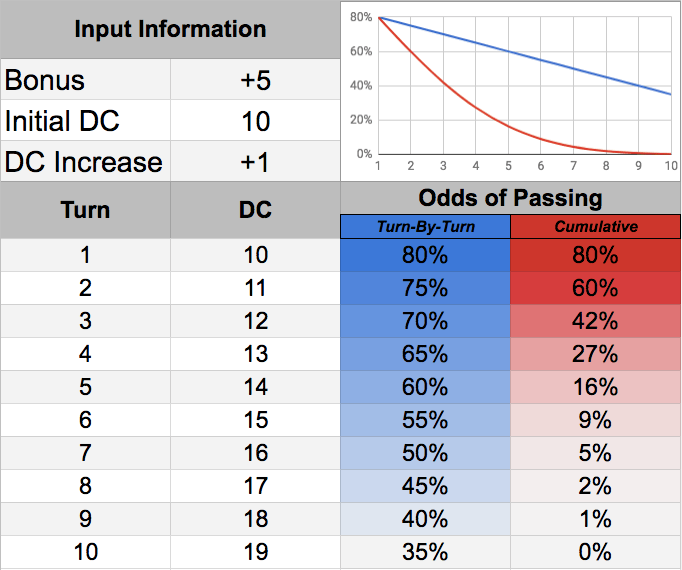
Scaling up Difficulty Class (DC) on successive checks is a bad idea. Some DMs like to increase DCs on successive attempts, dissatisfied with the relative ease of a standard skill check (or saving throw). However, doing this has drawbacks which you can see in action on the DC Increase Chart.
The “Bag of Rats” Problem
The "Bag of Rats" Problem is an issue that arises with RPG mechanics that trigger upon a kill. While kill trigger abilities are intended to reward the character for disposing of a foe, they incentivize players to metagame by carrying around a lot of easily-squishable pocket-sized creatures. Explore the solutions and find out which are best.
Vorpal Sword Mechanics
A Vorpal Sword is a slashing weapon that decapitates on a critical hit. Even experienced Dungeon Masters are wary of allowing a Vorpal Swords in their game--probably because they have heads. Since Vorpal Swords are some of the most fun you can have with your scabbard on, let's figure out how to make them work. … Continue reading Vorpal Sword Mechanics
“Beast Builder” CR Calculator for Rangers and Druids
The Beastmaster Ranger has long been plagued by the squishy-ness of its animal companion. While the Revised Ranger tackled some of the action economy issues for the Beastmaster, it did not address the underlying issue: that the beast is supposed to be the highlight of the show. Shapeshifting Druids are also plagued by unimpressive beast … Continue reading “Beast Builder” CR Calculator for Rangers and Druids
Psion Character Class Release and Build Notes
Back in December, I wrote about The Dark Sun Mystic. After D&D head gurus Mike Mearls and Jeremy Crawford commented that the Mystic subclass (teased in Unearthed Arcana) needed a major overhaul, I wanted to see if I could fix it myself. No easy task. After countless hours reading, digesting, concepting, charting, comparing, stat-ing, rolling, tinkering, testing, … Continue reading Psion Character Class Release and Build Notes
True (Euclidean) Move Distance
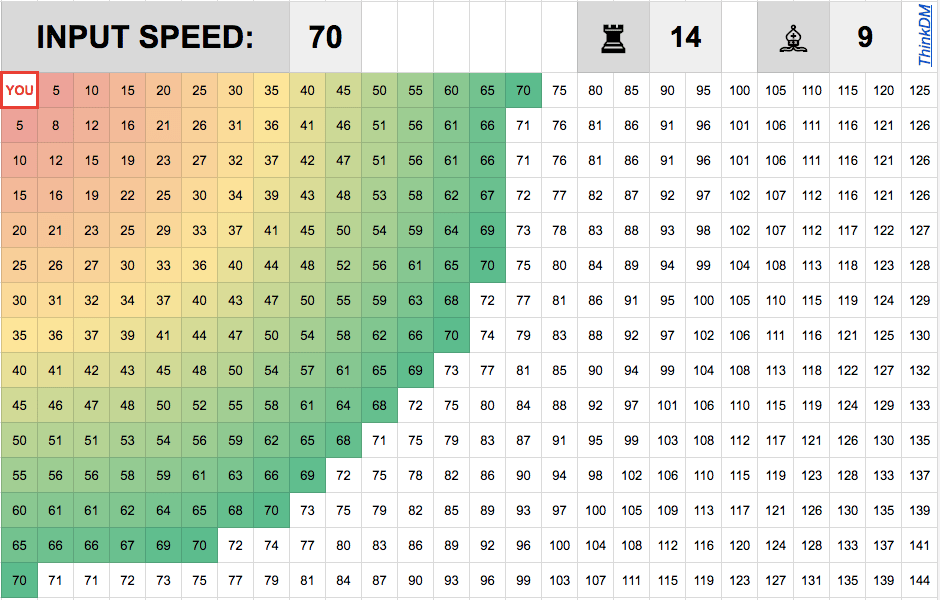
Only Clerics should move like Bishops. 5th Edition Dungeons & Dragons embraces non-Euclidean movement. That means it's agnostic as to lateral vs. diagonal movements in gridded combat. Such a system sacrifices a little realism for the benefit of simplification, with no impact to balance. Some DMs and players don't like to sacrifice realism. Thankfully, I'm … Continue reading True (Euclidean) Move Distance
Travel and Exploration Rules
While exploration is one of the Three Pillars of Adventure in 5th Edition Dungeons & Dragons, the rules provided in the core rulebooks are more abstract than mechanical. Those rules are now on the horizon. Here's news, analysis, and development of 5th Edition Travel rules.
Tortle Shell Defense is Broken
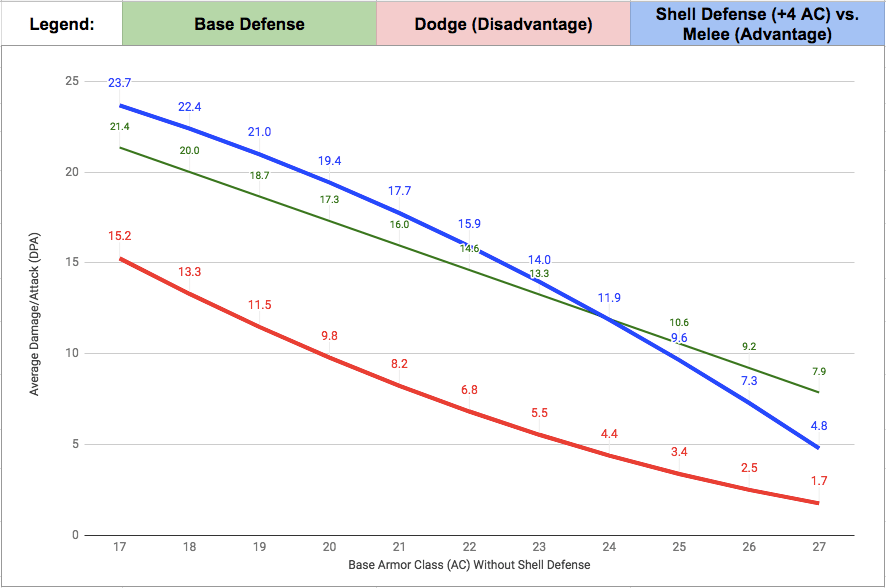
Back in September of 2017, D&D released the Tortle Package on the DM's Guild in conjunction with the Extra Life event to raise money for Children's Miracle Network. Included in this class was a mechanic called Shell Defense. It's broken. Maybe I shouldn't say that. Like many things in D&D, it is situationally good. That in … Continue reading Tortle Shell Defense is Broken
Can you cast multiple Delayed Blast Fireballs during Time Stop?
It is a time-honored tradition among Wizards. Preparing Time Stop as your 9th level spell so that you can fill a room with time bombs and watch the whole conflagration go off at once like a mischievous kid on Independence Day. Since playing with time invariably results in breaking laws of physics and fantasy, let's take … Continue reading Can you cast multiple Delayed Blast Fireballs during Time Stop?