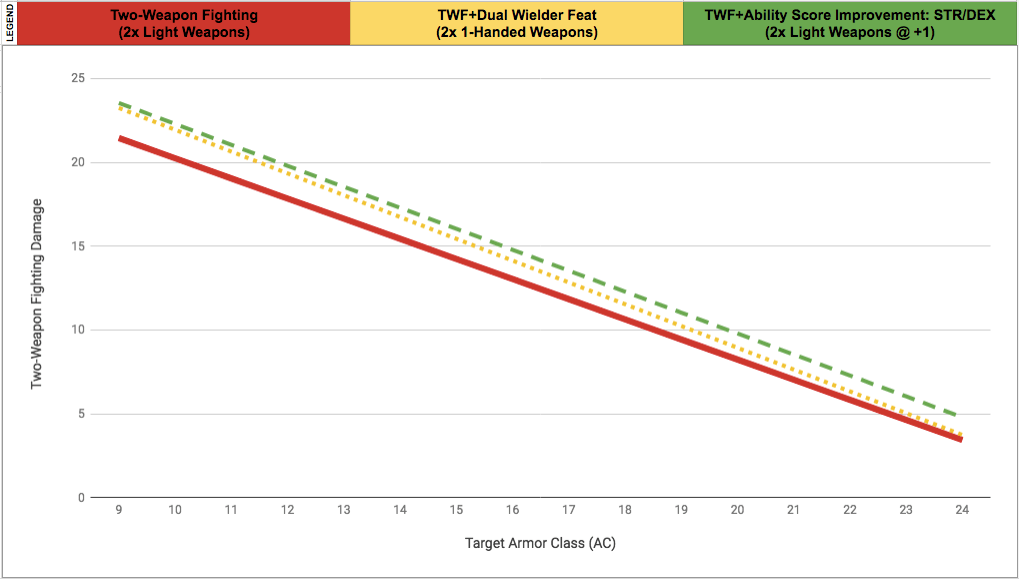
Last week we explored the mechanics and design goals of two-weapon fighting. This week, we're going to examine some hacks to make it more competitive with other fighting styles. Feel free to borrow pieces of these to spruce up two-weapon fighting in your game. While the goal is to achieve a system that fits into … Continue reading Two-Weapon Fighting Hacks
Tag: Barbarian
The Evil of Mandating Equipment
D&D 5e is great because it allows you the flexibility to build on top of the system. Sometimes we rush to fill gaps that are empty for a reason. Designing good content requires knowing these pitfalls so you can navigate them. Character features mandating equipment are one such case. What can we learn from Mike Mearls about how to design them?
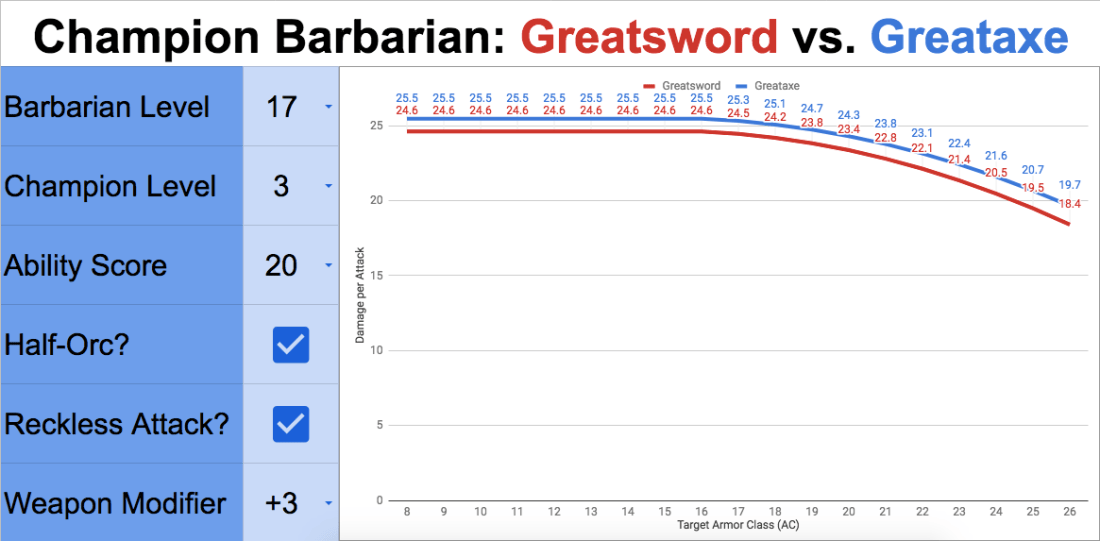
Champion Barbarian
Exploring Champion (Fighter) dips for Barbarians looking to increase their damage capacity with large weapons.
Greatsword vs. Greataxe
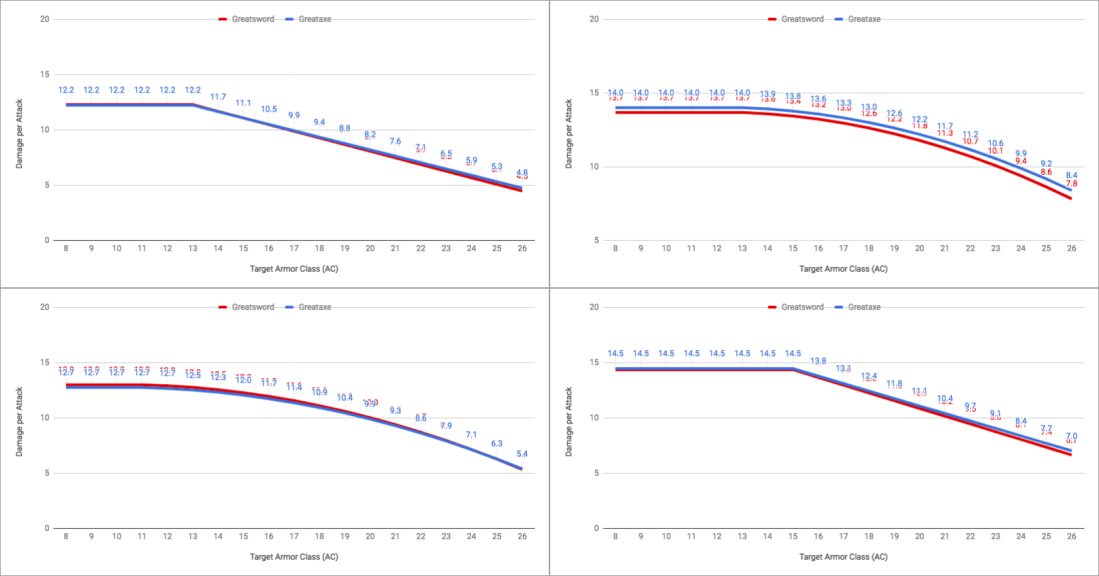
Conventional wisdom holds that a Barbarian is better wielding a Greataxe (1d12 damage) over a Greatsword (2d6 damage), due to the extra damage that results on a critical hit. Maybe we’re just used to it: the d12 is the die of the Barbarian. However conventional it may be, this idea is frequently wrong and may lead to using an inferior weapon, depending on your character’s loadout. Let’s dive into the numbers and see what kind of weapon your Barbarian should be using.
Flanking: A Side View
Flanking is an optional rule in the D&D Dungeon Master's Guide that grants players advantage when their characters attack opposite sides of an enemy. This optional rule can enhance tactical aspects of your game. Understanding more about how this affects different characters can help you decide when to use flanking in your campaign. If you're a player who knows your DM employs the flanking rule, this may help you avoid some pitfalls.
Dual Wielder vs. ASI
Since Two-Weapon Fighting (TWF) only allows you to make an off-hand attack if both the weapons you wield are light, many new players are tempted by the allure of upgrading that damage die with the Dual Wielder feat. Often an Ability Score Improvement (ASI) to your attack stat is the more effective and versatile choice. … Continue reading Dual Wielder vs. ASI
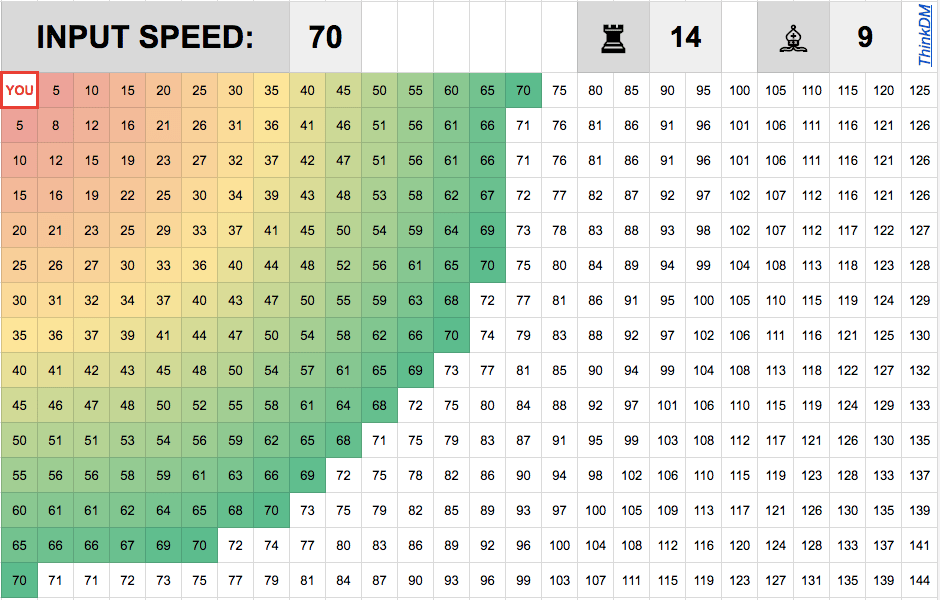
True (Euclidean) Move Distance
Only Clerics should move like Bishops. 5th Edition Dungeons & Dragons embraces non-Euclidean movement. That means it's agnostic as to lateral vs. diagonal movements in gridded combat. Such a system sacrifices a little realism for the benefit of simplification, with no impact to balance. Some DMs and players don't like to sacrifice realism. Thankfully, I'm … Continue reading True (Euclidean) Move Distance