Two-Weapon Fighting

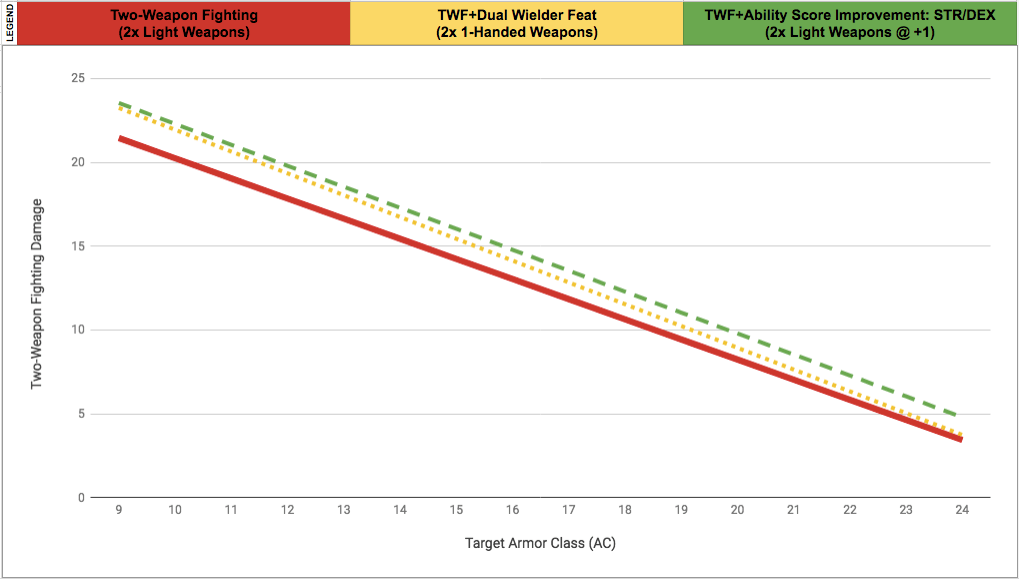
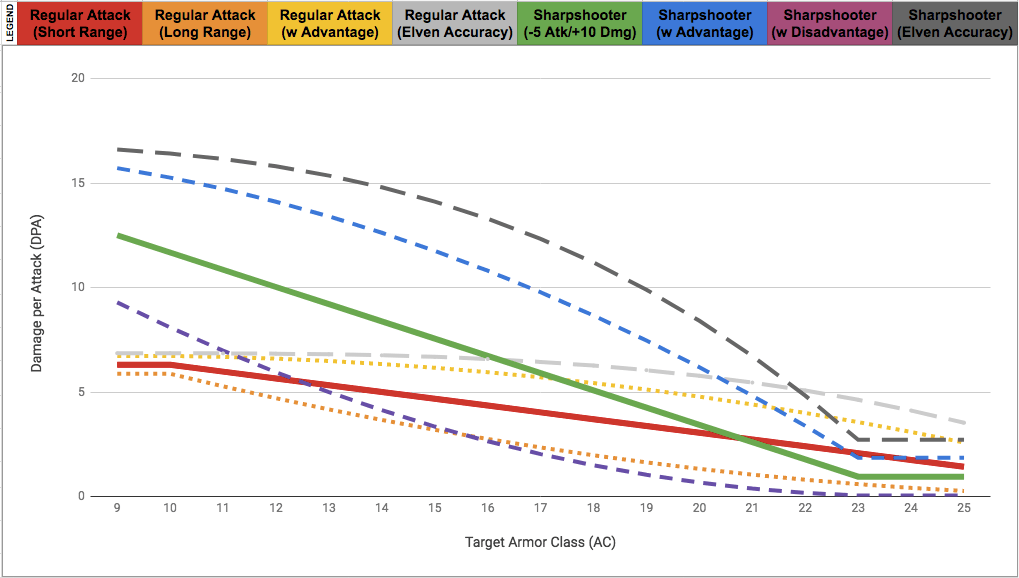
D&D Creative Director Mike Mearls recently tweeted about revised Two-Weapon Fighting rules, including a poll about where its damage output should lie: Mechanics Any discussion regarding two-weapon fighting involves these mechanics: Two-Weapon Fighting bonus action Dual Wielder feat Two-Weapon Fighting style Let's explore these mechanics first to identify where we have wiggle room to improve … Continue reading Two-Weapon Fighting

Warforged AC

On July 23, 2018, along with the release of the Eberron setting for 5e, D&D released the Races of Eberron Unearthed Arcana, featuring updated versions of three races (Warforged, Shifter, Changeling) and one new race (Kalashtar). Today's focus is the Warforged. Integrated Protection The thematic highlight of the Warforged is its armored body. Great design … Continue reading Warforged AC

Flanking: A Side View

Flanking is an optional rule in the D&D Dungeon Master's Guide that grants players advantage when their characters attack opposite sides of an enemy. This optional rule can enhance tactical aspects of your game. Understanding more about how this affects different characters can help you decide when to use flanking in your campaign. If you're a player who knows your DM employs the flanking rule, this may help you avoid some pitfalls.

How Strong is Elven Accuracy?

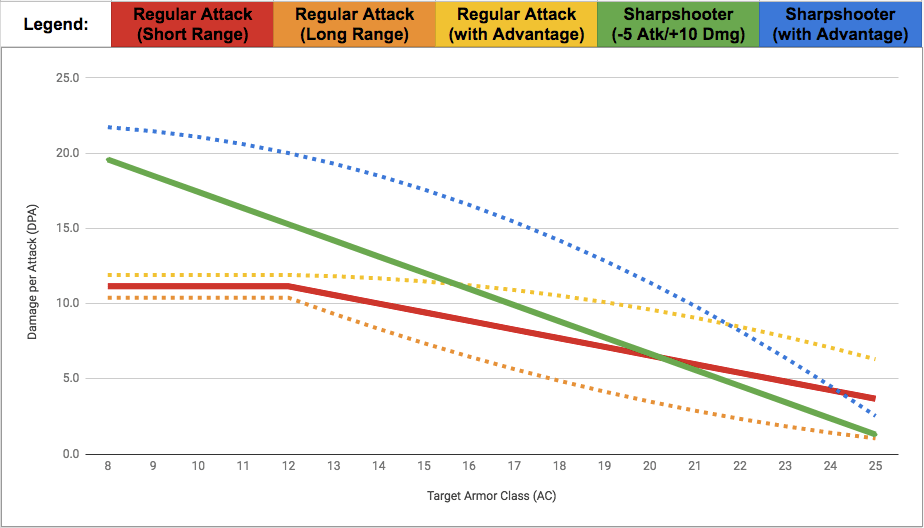
Elven Accuracy gives you "super advantage" via a mechanic that lets you select the best of three dice rolls when you have advantage on an attack. This is widely regarded as a very strong, if not broken, feat. The truth is that the "super advantage" part of the feat doesn't do that much, because already having advantage is normally good enough.

True (Euclidean) Move Distance

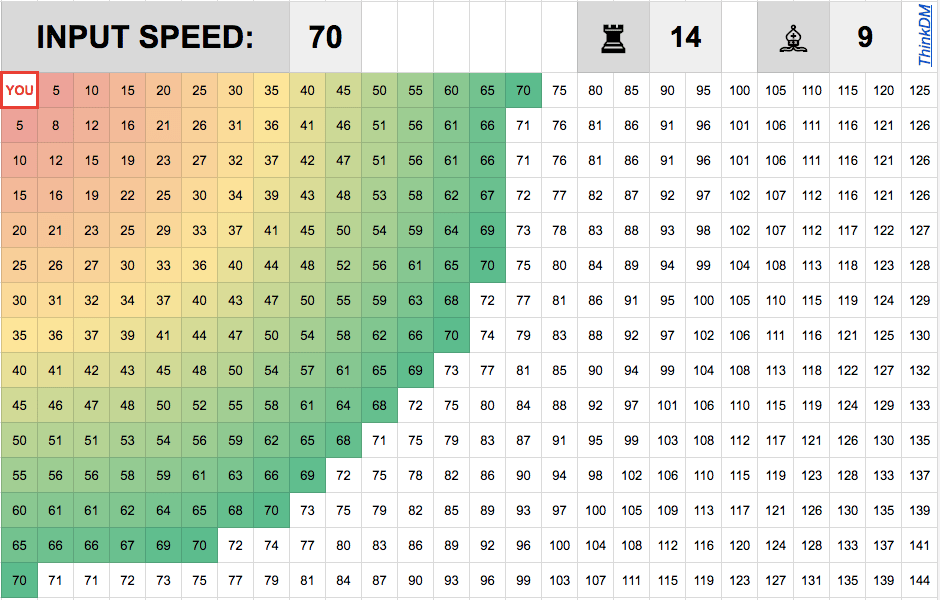
Only Clerics should move like Bishops. 5th Edition Dungeons & Dragons embraces non-Euclidean movement. That means it's agnostic as to lateral vs. diagonal movements in gridded combat. Such a system sacrifices a little realism for the benefit of simplification, with no impact to balance. Some DMs and players don't like to sacrifice realism. Thankfully, I'm … Continue reading True (Euclidean) Move Distance